

Perri Lynch Howard uses painting, drawing, installation, and audio recording to investigate the passage of light, sound, and signal through the world’s most vulnerable ecosystems. She is represented by the Seattle Art Museum Gallery and ArtX Contemporary and is a volunteer field recording ambassador with Quiet Parks International.
Image: What kind of religious and cultural milieu did you grow up in?
PLH: I was raised Catholic in Marblehead, Massachusetts, a suburb of Boston founded by English fishermen in 1629. History runs deep there. My hometown and church were underappreciated by my teenage self, but now the place is dear to my heart in every aspect—the tides, the seasons, the crooked gravestones of salty sea captains. Even Star of the Sea Church holds many lessons. Early on, I learned that nature and culture were inextricable, and maritime history was the binder. I return to Marblehead often and am still a student of my growing-up place.
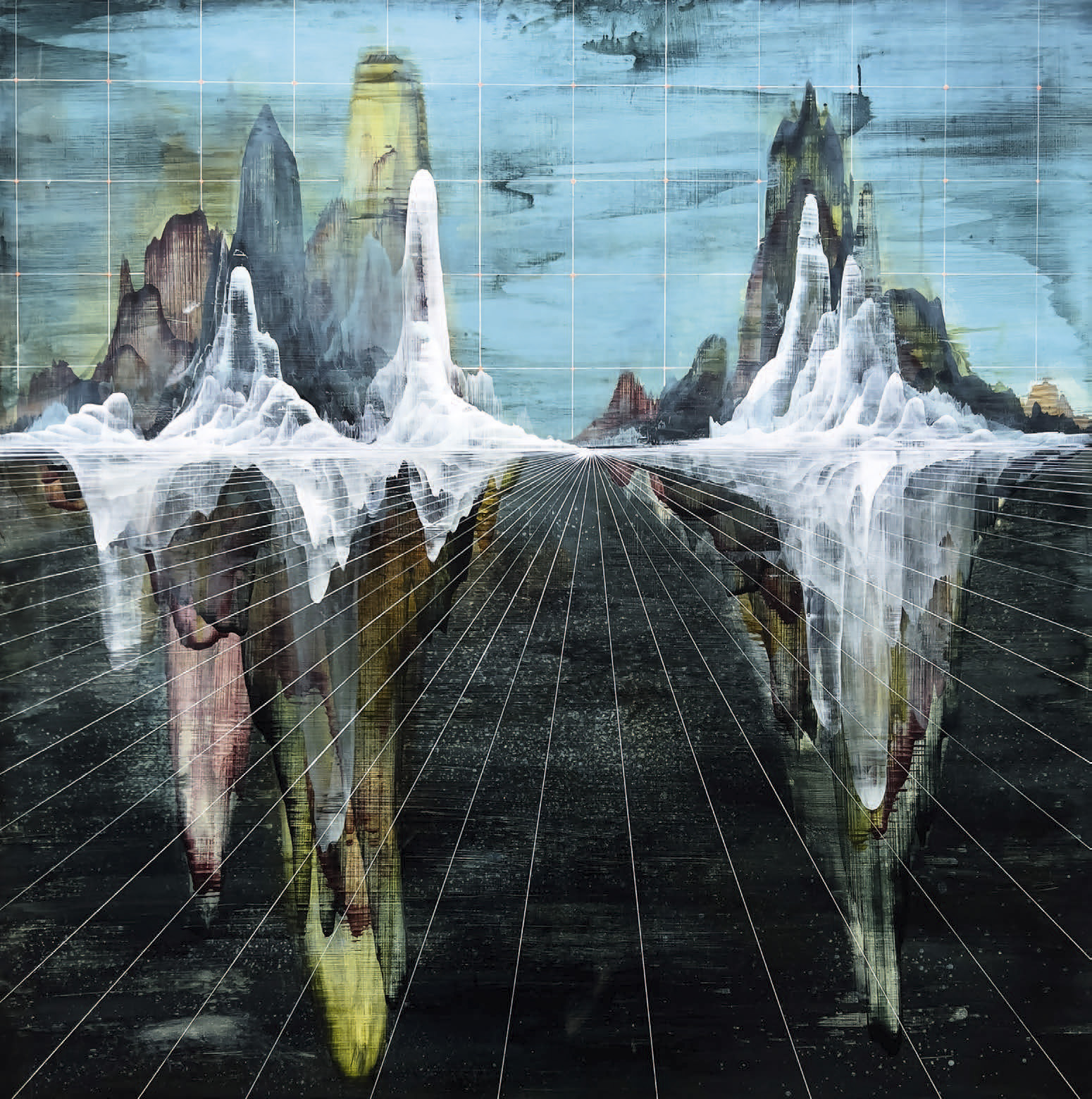
Perri Lynch Howard. Frequencies: Way Back When, 2026. Graphite on panel. 36 X 36 inches.
Image: You describe your work as phenomenological in orientation. Can you describe what that means to you?
PLH: Phenomenology is about the transient nature of reality. Sound, light, and sensation are always moving, never static. This abundance is passing through our awareness constantly, but so much goes overlooked or unheard. The richness lies in the liminality of our experience—passing clouds, sunlit branches, king tides. If I settle in and listen—and for me this means monitoring through the headphones—phenomenology unfurls.
Image: Do you sense the sacred in your creative process?
PLH: I sense the witness in my creative practice, and that is sacred. To be quiet, respectful, and observant is a lovely way to be a human. I am a little rowdy by nature, so this doesn’t come easily. I can’t fight the impulse to stir things up, but listening calms my soul. When our planet speaks—through wind, water, whale song—it is profoundly sacred, and I live in fear of missing the message, of drowning in self noise.
Image: There is something transfixing about your underwater soundscapes, which make the ocean feel like its own empty, ancient cathedral. Can you talk about making these recordings?
PLH: It’s possible that the churches of my youth gave me a love for reverb. The language of sound is interesting. Attack refers to how quickly a sound commences. Decay is how slowly it fades. In Overheard|Underwater, I was trying to imagine how whales sound not to us but to each other. I traveled to the Tank Center for Sonic Arts, an abandoned seventy-foot water tower in western Colorado that offers thirty seconds of unfettered decay. Sound takes time, and the Tank just keeps on giving. Putting whales in the Tank, combined with my recordings of the ocean, created an elasticity and scale that felt conducive to long listening.
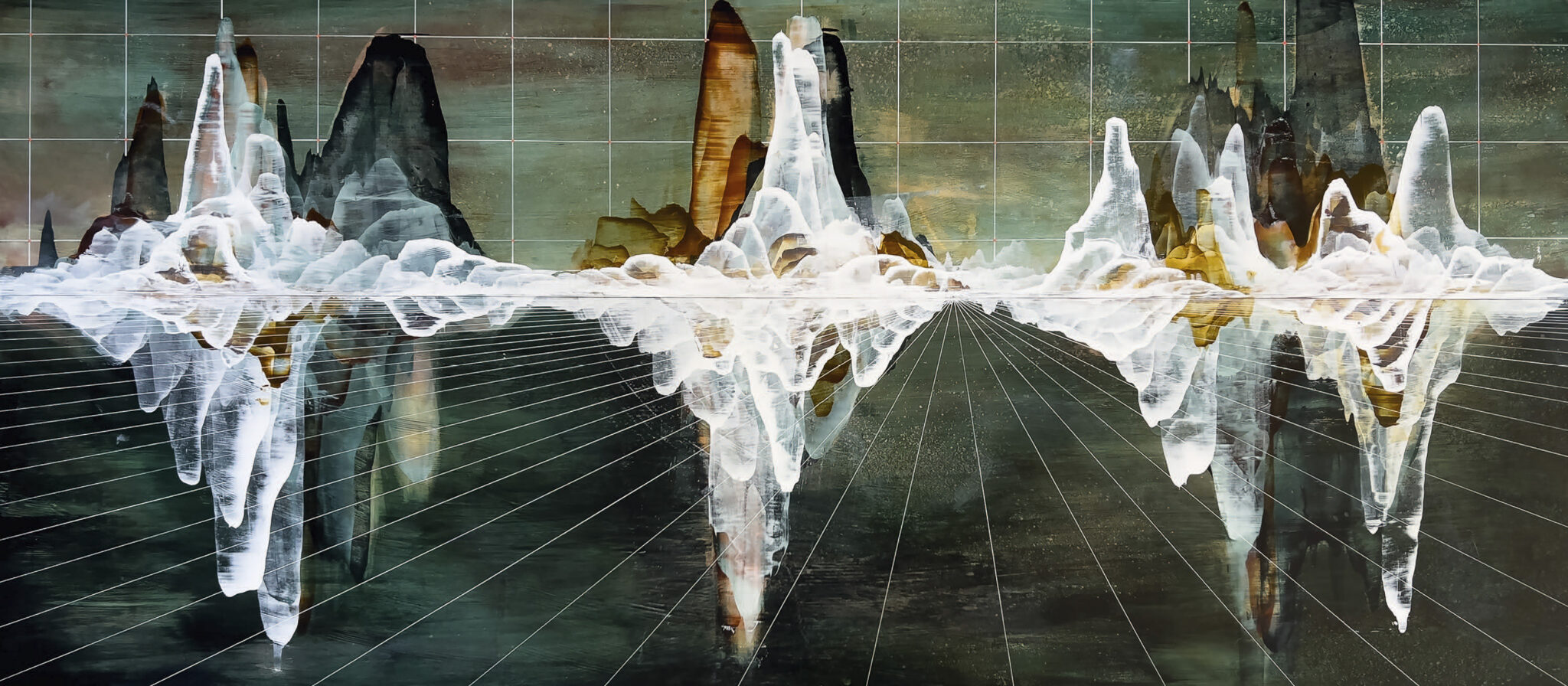
Perri Lynch Howard. Frequencies: Inner Estuary, 2026. Acrylic and graphite on panel. 30 X 66 inches.
Image: You often visualize soundscapes. What feels important to you about crossing between senses, and what do you hope to elicit this way?
PLH: The visualization of sound happens naturally for me. From the subglacial groans of melting ice in Svalbard to the shifting velocities of a windstorm in New Mexico, each artwork is constructed from two primary data points: the physical geography of the recording site and the digital waveform of the audio editing process. If we listen closely, nature’s soundscapes hold stories of adaptation, regeneration, and growth—from whales modifying their songs to navigate the mechanical din of a noisy ocean, to the bright, sudden trill of unexpected birds as they follow the shifting logic of new flyways. Cross-pollinating between auditory and visual landscapes takes me to a third place, an entirely new sensory landscape built from real experiences, led by listening.
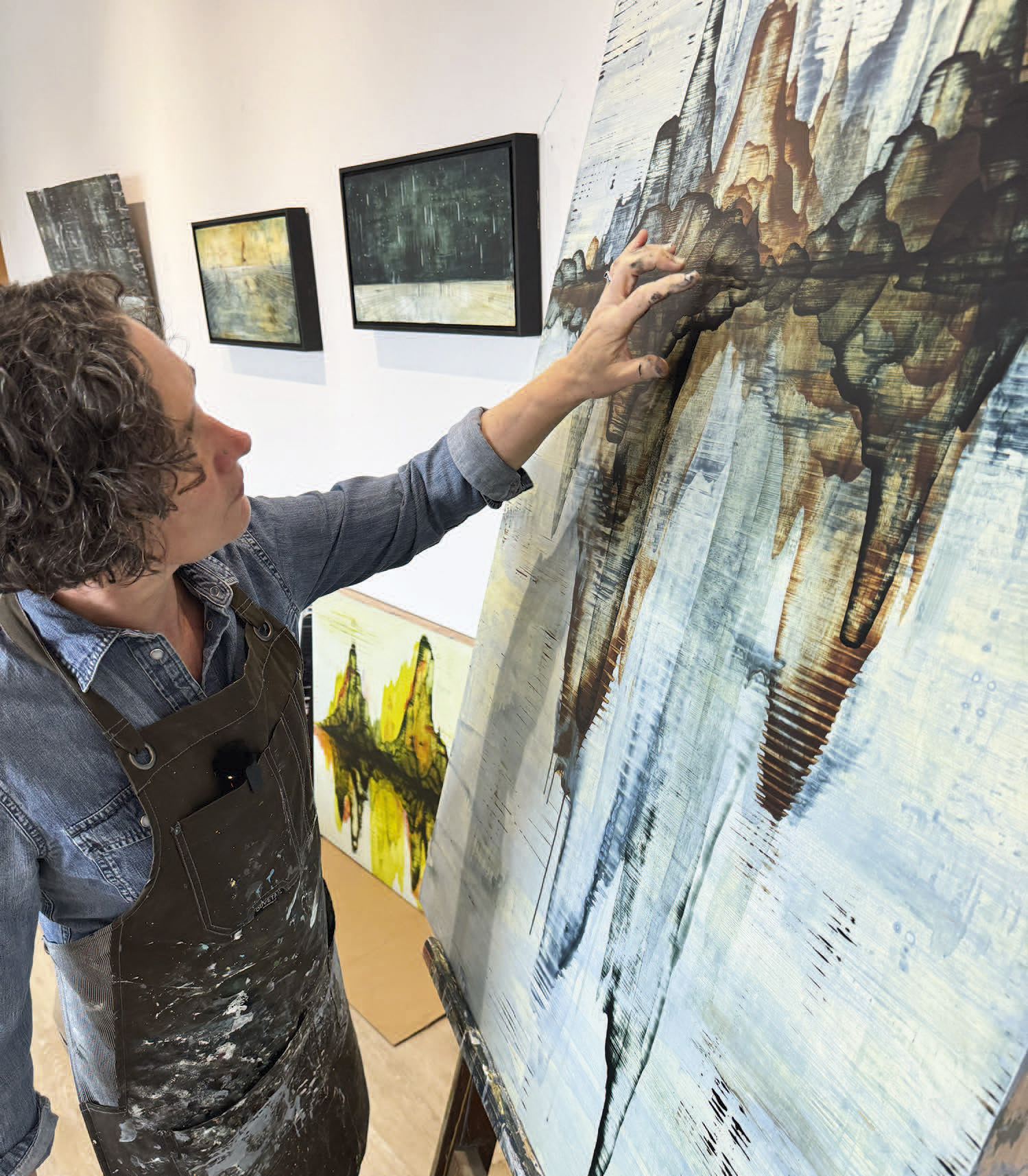
Perri Lynch Howard in her studio.
Image: You’re now undertaking a project that involves listening to the subtle sounds of a forest awakening after a devastating fire. What has this act of listening revealed?
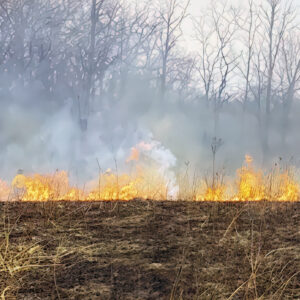
PLH: Cindertone interrogates the phenomenology of fire and the precarious sensory landscape it leaves behind. As an Oregon State University Fireline Fellow, I’m working on a three-year project rooted in deep listening and audio field recording that will culminate in an immersive soundscape with video projection. It’s guided by three core questions: How does the sound signature of the forest change as it recovers from fire? Are these new, harsh edges between what burned and what remains the ecotones of the future? And in the absence of the old-growth canopy, how does the shifting geometry of light and wind redefine the place-based experience of the forest? As I monitor these landscapes through headphones, the emotional terrain is what has my attention. It is a heartbreakingly ravaged landscape, yet birds are singing, streams are flowing, and wind is whistling through what canopy remains.
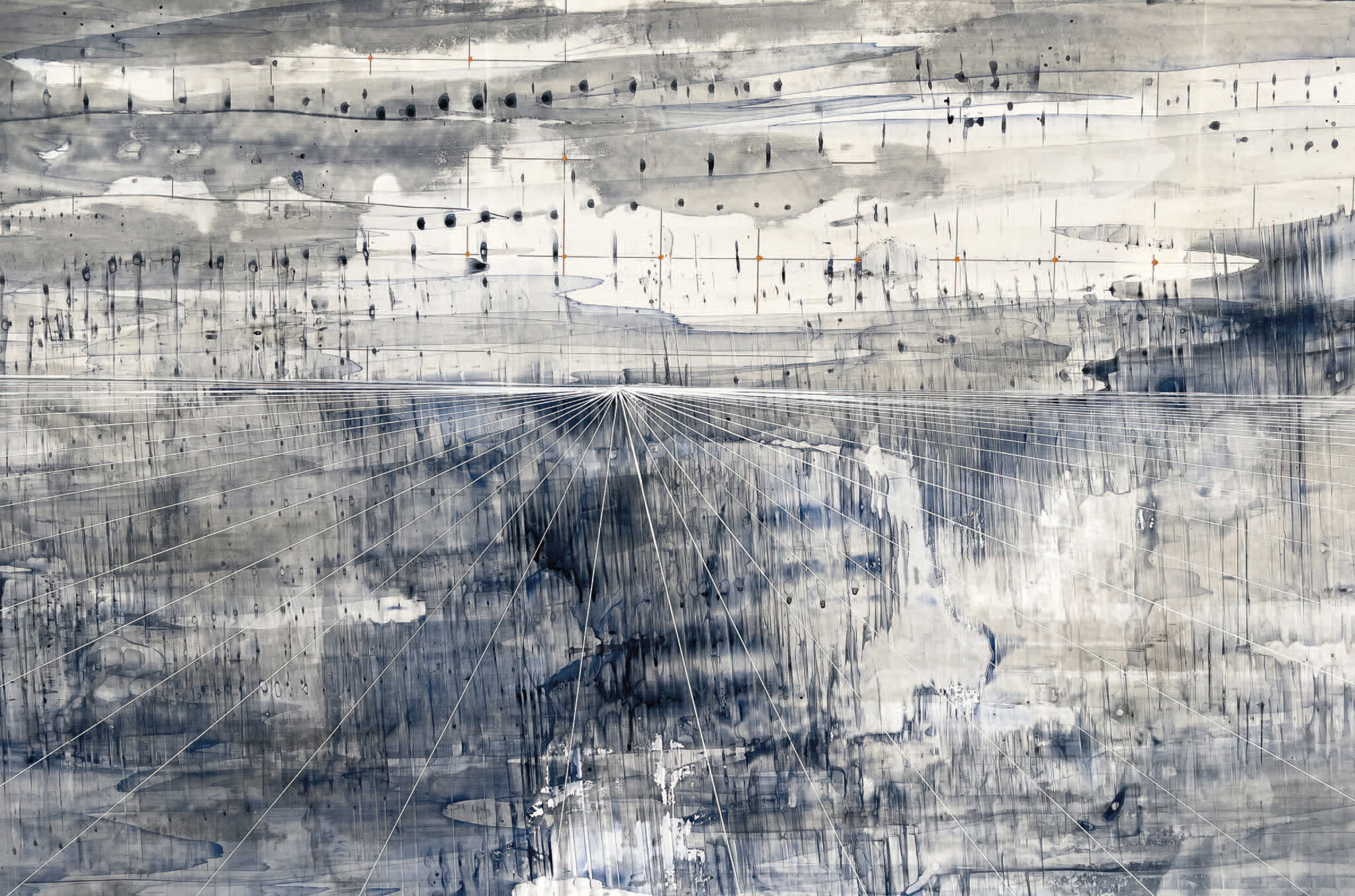
Perri Lynch Howard. Lost Legends: Aeriform Study, 2025. Ink, acrylic, graphite on paper. 36 X 50 inches.
Image: You’ve spent time in residencies around the world, from Maine to the Arctic. What qualities draw you to a particular place?
PLH: I am drawn to places because of their edges—places of friction, energy, and growth. Midcoastal Maine has very interesting edges, where the Kennebec River meets the Sheepscot and the swift-running tides mean these edges are constantly changing and sonically active. Being in residence in these dynamic landscapes allows me to make long-duration recordings, where you can listen to natural adaptations from day to night and season to season. It’s wondrous! In the Arctic, I listened each day for two weeks as a river froze toward winter. The entire soundscape changed from roaring water to utter, frozen silence. Vashon Island in Puget Sound is situated directly under the flight path to SeaTac Airport. While recording there for three weeks, there was not a single noise-free interval of any length, day or night. I leaned into the noise, to hear the sounds of finches singing out through the roar of the turbines and owls calling at night over highway traffic on the mainland. These are important lessons for survival, even if it’s all a little hard on the ears.
Perri Lynch Howard. Lost Legends: Depth Sound Study, 2026. Ink, acrylic, and graphite on panel. 12 X 24 inches.
Image: Do you think the act of paying attention is intrinsically spiritual?
PLH: Yes. As artists and humans, I believe it is our duty to stay sensitive to our surroundings, always. As I mentioned, sound takes time to absorb and interpret—but listening actually gives us time. Listening is an analog process in an increasingly digitized world. I hope my soundscapes give listeners time—to relax, reflect, and consider their own relationship to quiet, nature sounds, and noise. This line of thinking is often referred to as eco-spiritual practice, or spiritual ecology.
Image: You are working very consciously within a climate-changed world. Do you feel your work is a form of lament? Do you think the sounds you’ve captured might evoke different feelings a century or two into the future?
PLH: I hesitate to call my work a lament, because there is still so much to save. There’s a vital difference between subtractive quiet and the silence of extinction. One restores our sanity by removing industrial noise; the other breaks our hearts by removing essential aspects of healthy ecosystems. Our task is to stay sensitive to both: to welcome the stillness that heals, while grieving the stillness that haunts. This is how we’ll get in right relationship with this living planet, our home. The first step is to listen.