

WHILE FOLLOWING A LOCAL REPRESENTATIVE on a pre-election tour of some area businesses, I began to take note of the way he was interacting with his constituents. He seemed to be going out of his way to touch them: to grab their arms, to vigorously laugh and clap their shoulders, to give energetic high-fives and long, chummy handshakes. I couldn’t be sure, but I suspected I knew what he was doing. I had seen it before. At some point he had noticed, or had been advised, that photojournalists like me prefer to take pictures of active, physical touch. He was acting this way, at least in part, because I was there.
Photojournalists recognize that this sort of dance—the politician reaches out a hand, the photographer obediently lifts the camera—is a barrier to accuracy. In fact, the National Press Photographers Association code of ethics addresses this sort of situation pretty explicitly, right after point 1 (“Be accurate”), in point 2 (“Resist being manipulated by staged photo opportunities”). Yet because we usually photograph in proximity to people, and because the people we photograph simply behave differently around a camera, we know that we can never present a fully neutral, objective depiction of reality as it is in itself. We can only ever photograph the world as it is when a camera is present.
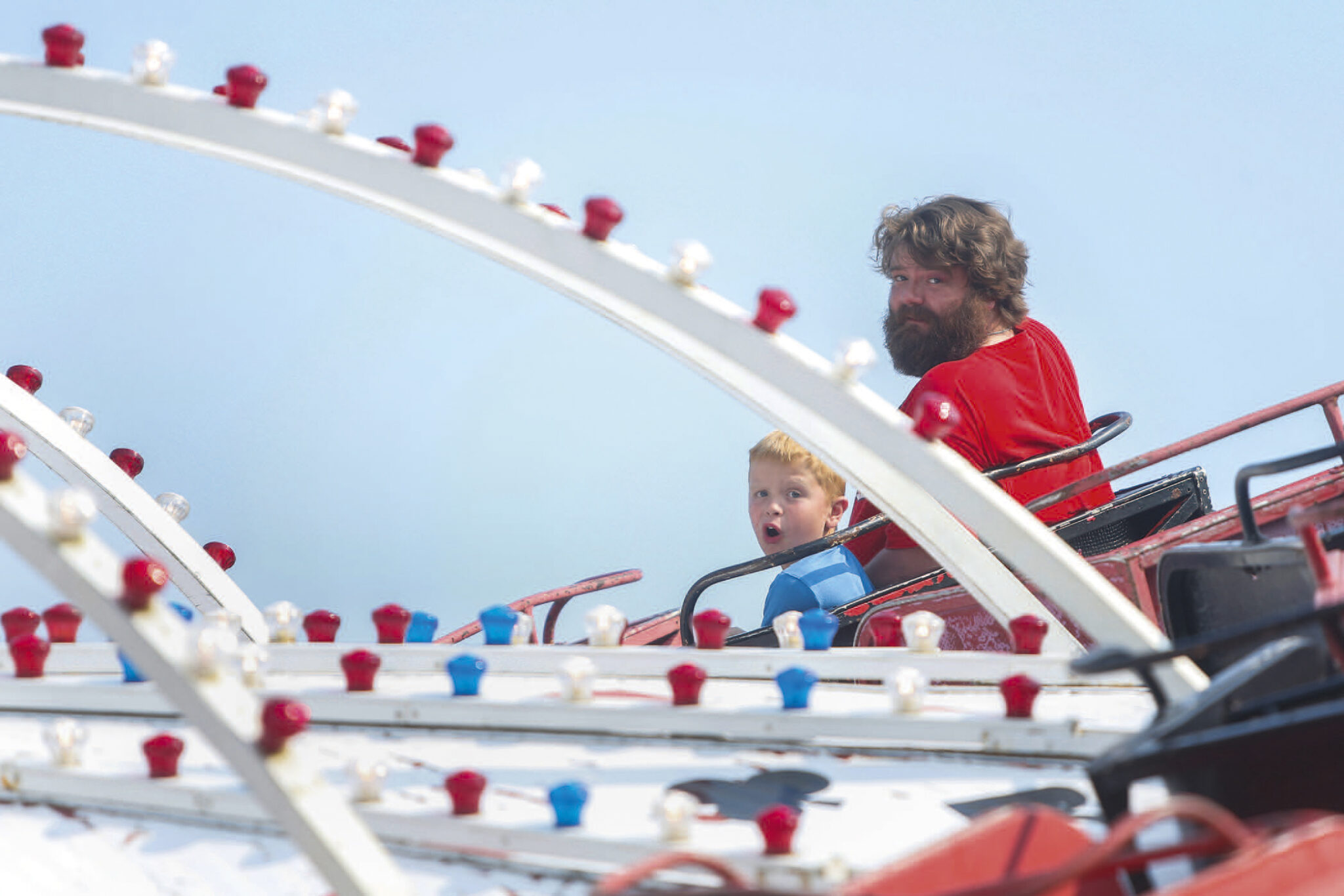
Coralville, Iowa, 2015.
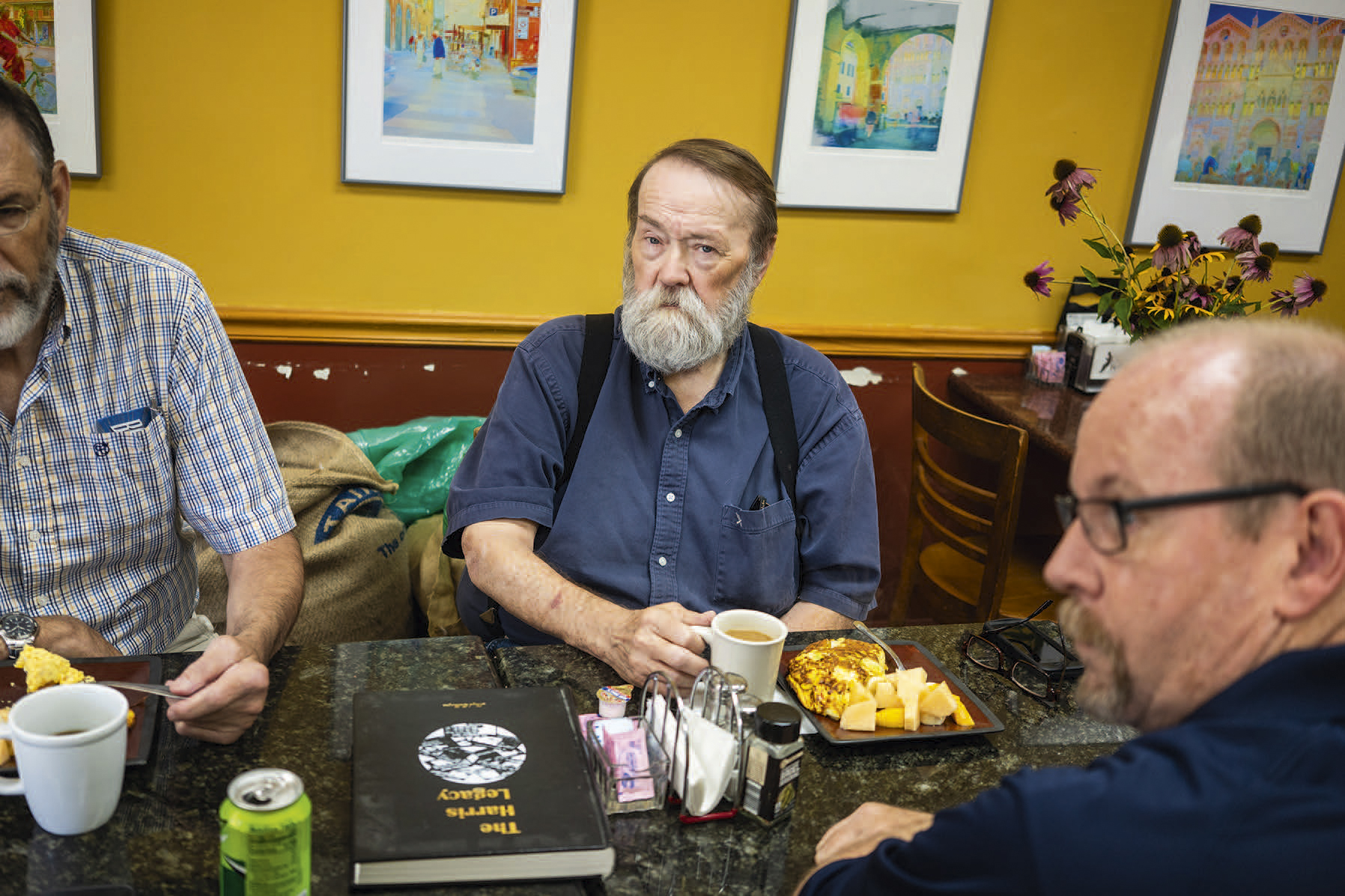
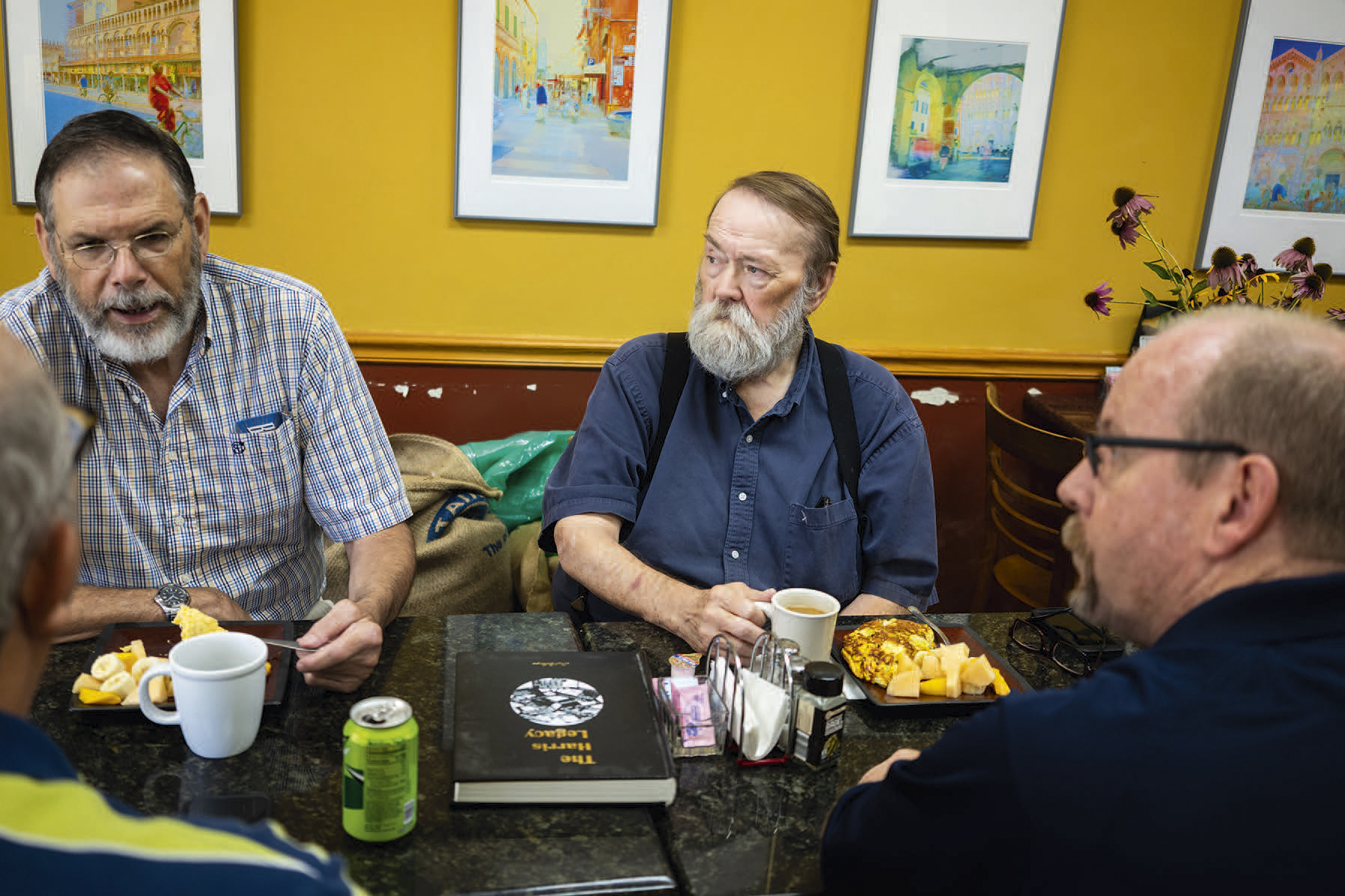
Over the last year, I’ve been thinking about a particular category of photograph from my archive that seems to illustrate this. I call it, somewhat awkwardly, a looker: an uncomfortable scene in which the subject, whom the photographer wished to appear candid, seems to have just noticed the camera. Their startled glance makes the image appear less like a portrait than a violation. Photojournalists, who only submit for publication a fraction of the photos we take, often discard these breaks in the fourth wall, even if we like them as images. This is in part because point 5 of the code (“Do not intentionally contribute to, alter, or seek to alter or influence events”) forbids us, among other things, from modifying the scenes we enter. For example, I can’t physically remove an unsightly object in order to improve the composition. Lookers appear to violate this principle of detachment by demonstrating our influence over a person’s behavior. The subject wouldn’t have this startled expression, we might think, if they hadn’t just noticed my camera. So we toss the photos.
But lookers do something important: They reveal the constructedness of the endeavor of photography itself. They disclose that a latent degree of manipulation is always already there, by reminding us that photographers are always modifying the scene because we’re in the scene. “To look at an object is to inhabit it,” writes philosopher Maurice Merleau-Ponty in his Phenomenology of Perception. Photography, perhaps counterintuitively, is not a mimetic art but a poietic one. We don’t mimic reality, but we contribute to its construction, with an act of perception that is prior to and more reliable than that of a photographer who somehow possessed an Archimedean view of the scene “from nowhere.”
Burlington, Iowa, 2021.
Burlington, Iowa, 2021.
Photographers are in the world, right alongside the people we photograph, and no matter how committed we are to journalistic detachment, we are always, inevitably (in poet Marie Howe’s phrase) “utterly there.” Some lookers, then, may be more authentic than candid photographs. They certainly depict a world that is equally real.
Last year, I started tagging my own lookers whenever I came across them in my shot selection process. Around the same time, I started reading the work of twentieth-century Irish novelist and philosopher Iris Murdoch, who was warm toward ordinary piety but took for granted that there is no God and that life is basically pointless. She saw artists as constantly tempted to a self-absorption that distorts reality. Charles Arrowby, the comically unsympathetic protagonist of The Sea, the Sea, illustrates this kind of vicious interiority well. Written in the form of a memoir, the novel documents Arrowby’s inability to read clear rejections of his romantic advances, too blinded by delusions of grandeur to notice his own descent into squalor. A famous theater director who prizes his hefty trunk of books, Arrowby succumbs to the temptation that Murdoch believes faces most artists: to console oneself amid the chaos of the real world with romantic self-indulgence, to write as autobiography a story that is only a restatement of the epics of singular, mythic heroes whom the artist has come to regard as his peers and equals.
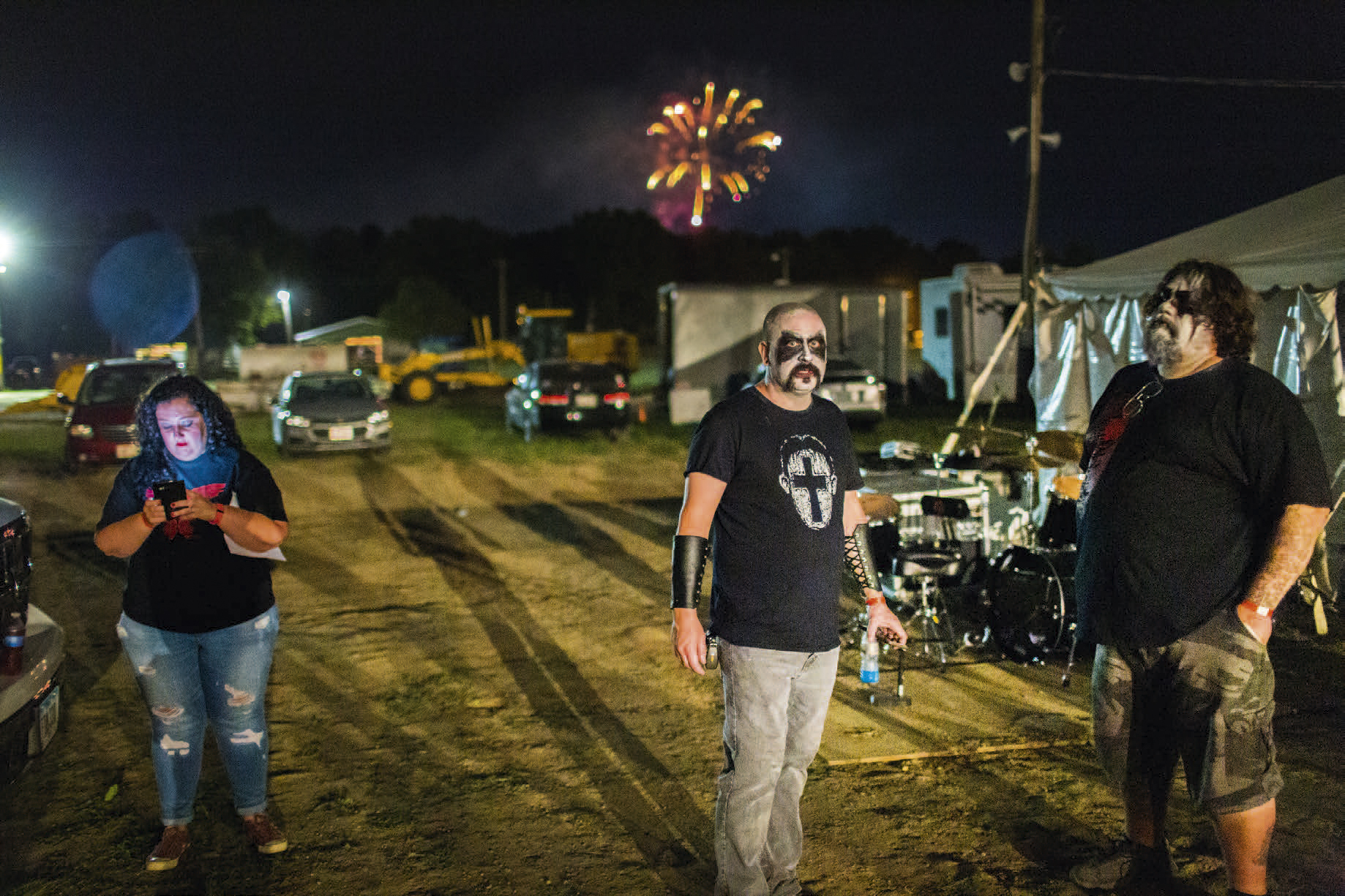
Urbana, Illinois, 2017.
“Good art,” on the other hand, “reveals what we are usually too selfish and too timid to recognize, the minute and absolutely random detail of the world.” Good art’s magnetic quality, Murdoch writes in The Sovereignty of Good, is that it “transcends selfish and obsessive limitations of personality.” A good artist is unalarmed by the pointlessness of life, yet doesn’t (like the existentialists) glamorize self-determined resoluteness in the face of the absurd.
Photojournalists, like all artists, are prone to this kind of self-absorption. We are eager to see our work reach the largest audience possible, always hoping to see our byline on the front page. Early in our careers, we idealize the great photographers of sports, nature, and global conflict, longing for what we perceive as their extraordinary, exotic lifestyles. As professionals, we feel pressure to build a unique brand that will make us attractive to the editors we rely on to assign us work, or we face the opposite malaise: the suspicion that our editors just want us to make deadline work that is generic but consistent, preventing us from expressing our unique inner voice.
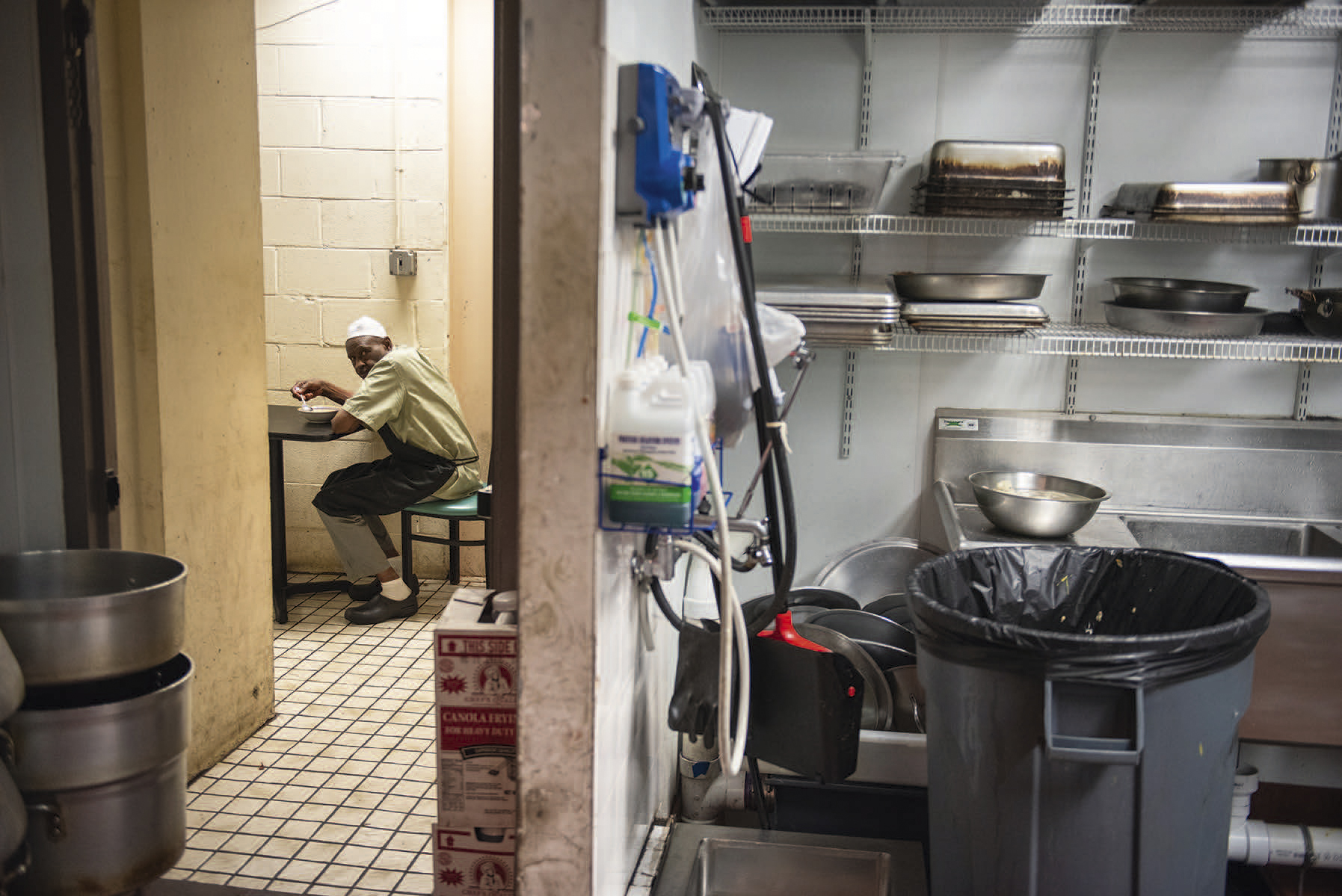
Vienna, Virginia, 2016.
All of this, Murdoch claims, prevents us from achieving the ideal we were after in the first place: objectivity. “Good art shows us how difficult it is to be objective by showing us how differently the world looks to an objective vision,” she writes. Objectivity, like the Good, will always be just out of reach; this is why many journalists now (rightly) recognize trustworthiness as a more noble and realistic aspiration. But self-centeredness, Murdoch argues, prevents the artist from even looking in the right direction. If objectivity is worth pursuing at all, then what’s required is a clear-eyed selflessness, a kind of humility exemplified by the scholar “who does not even feel tempted to suppress the fact which damns his theory.” Lookers damn the theory that a photographer could ever achieve objectivity. With blunt, aromantic severity, they affirm a related value: realism.
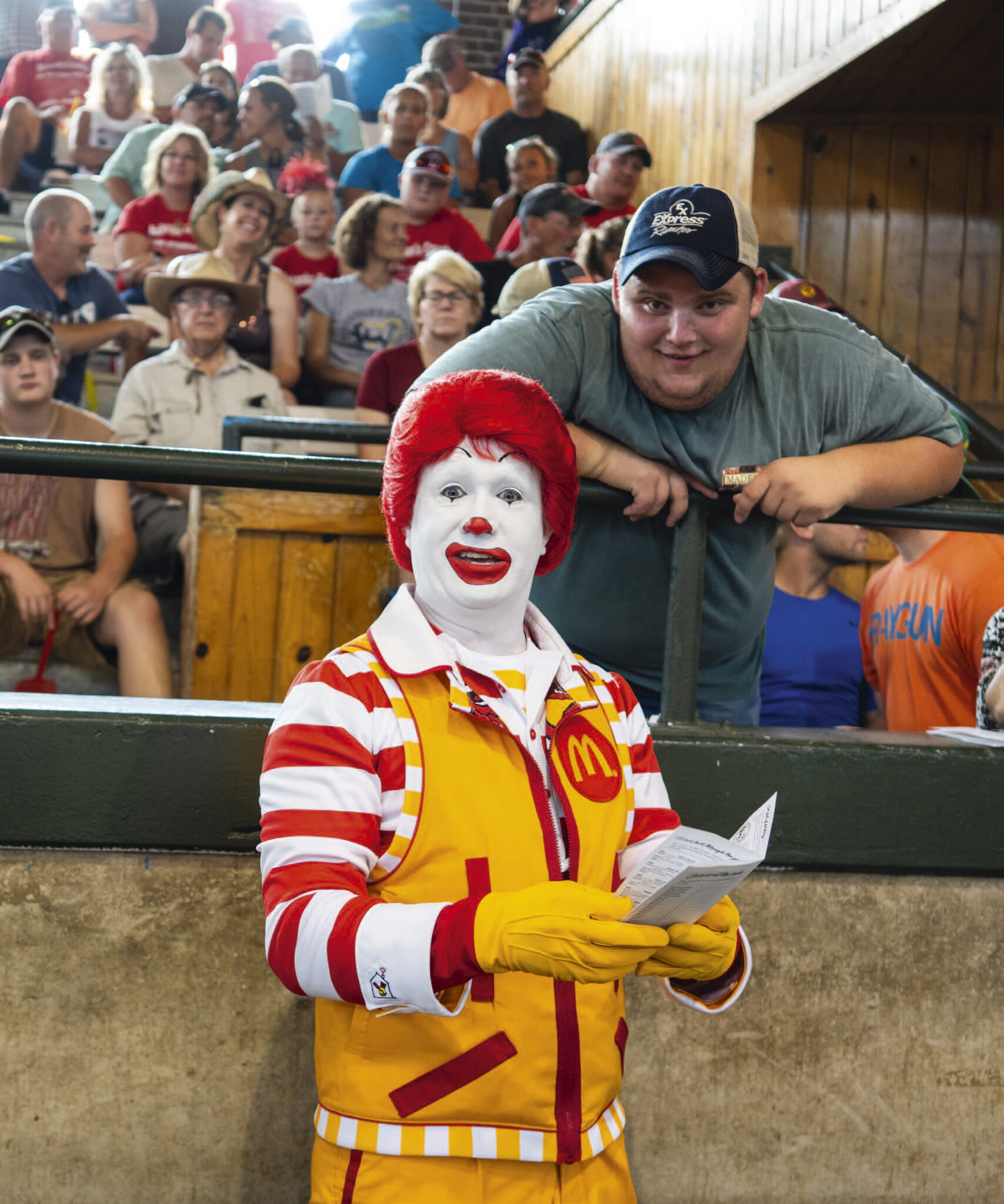
Iowa State Fair, Des Moines, 2018.
Lookers aren’t the only examples of breaks in the fourth wall in photojournalism. We submit photos that do this all the time, especially when such breaks are newsworthy (think of the public figure noticing he’s been caught on camera engaging in some sort of misconduct), or when they have the ephemeral pathos of a glancing, unplanned portrait (think of Afghan Girl by Steve McCurry, who, it turns out, published many doctored photos and no longer considers himself a photojournalist). These are the kinds of decisive moments photojournalists regularly celebrate. But lookers don’t have these newsworthy or romantic qualities; they are awkward and uncomfortable, “minute and absolutely random.” I think Murdoch would love them.
The greatest art, she writes, “shows us the world, our world and not another one, with a clarity which startles and delights us simply because we are not used to looking at the real world at all.” Murdoch might have appreciated how lookers bring viewers back to reality by reminding us of the artist’s limitations; that the photographer does not and never has possessed a view from nowhere. This is, if anything, a call to humility.
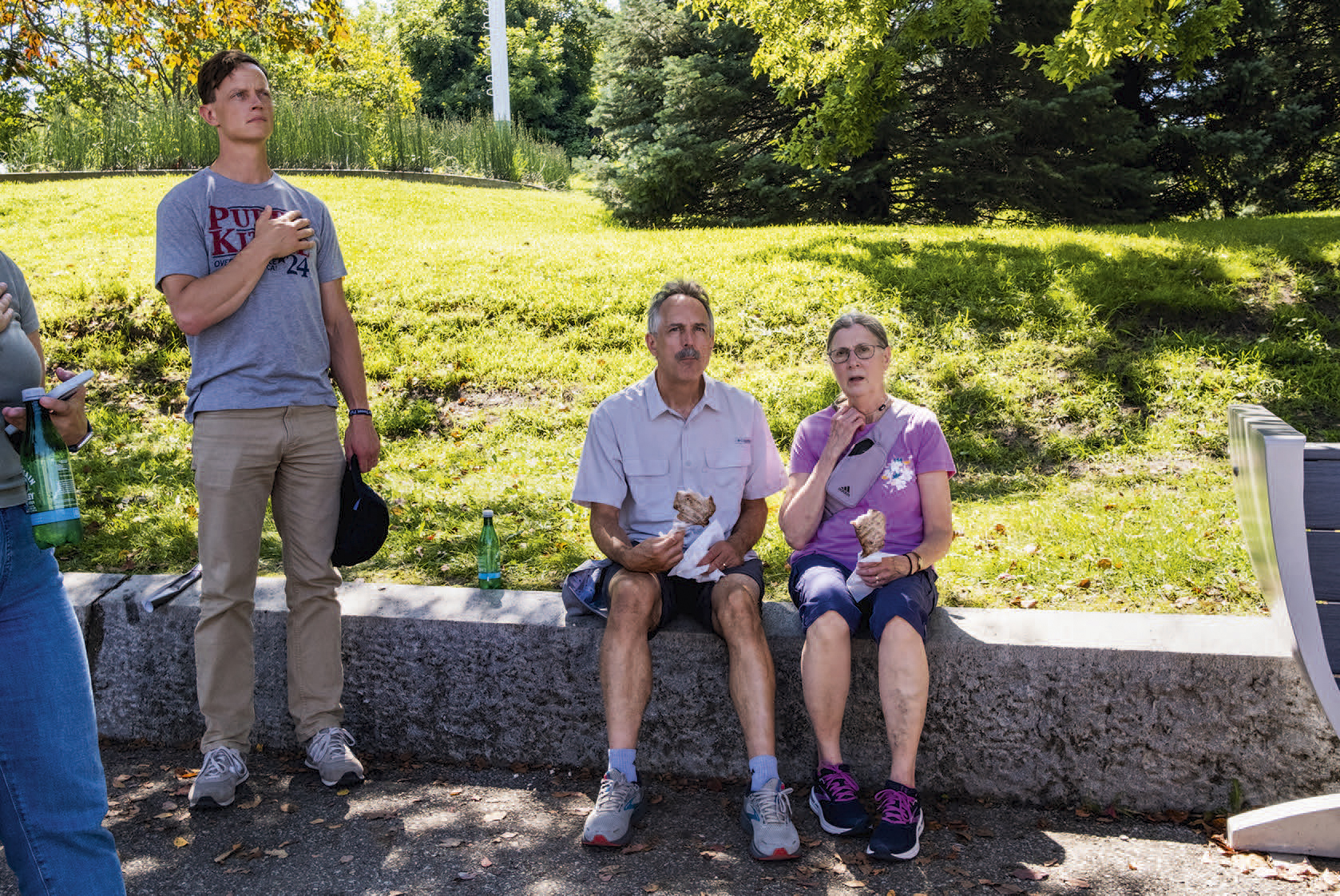
Iowa State Fair, Des Moines, 2025.
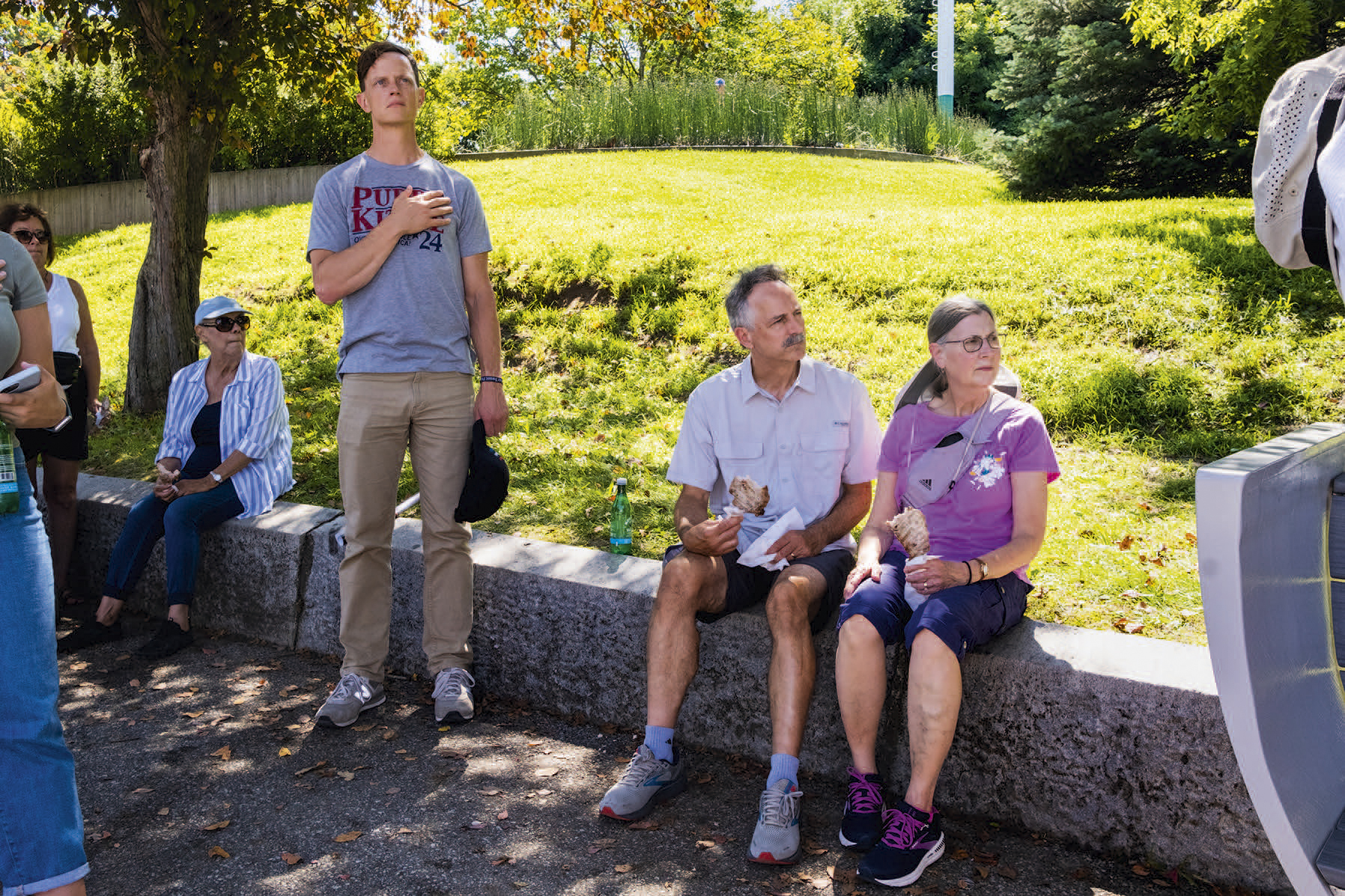
Iowa State Fair, Des Moines, 2025.
On the other hand, lookers seem to redirect attention back onto the artist, and Murdoch defines great art as, above all, impersonal. So while I’m tempted to celebrate the irony that the photos I’ve always considered outtakes might be the closest I’ve ever come to making good art, this would be employing Murdoch as a means of flattering my own vanity: the temptation to self-absorption once again.
Murdoch disputes the claim, popular among moral philosophers of her time, that an agent’s unspoken, unexpressed intent is largely irrelevant in moral matters; that the thought doesn’t really count if it’s not accompanied by moral action. Her counterargument, that the thought really does count, rests on a visual metaphor—on the act of looking. Following Simone Weil, Murdoch calls the act of habitual, unselfish, patient regard for the world as it really is attention, and calls this attention an act of love. Habitually directing one’s attention toward the Good—toward, as Saint Paul writes, “whatever is true, whatever is honorable, whatever is just, whatever is pure”—has moral stakes, because it is a way of ensuring one will make the right moral decision when the time comes.
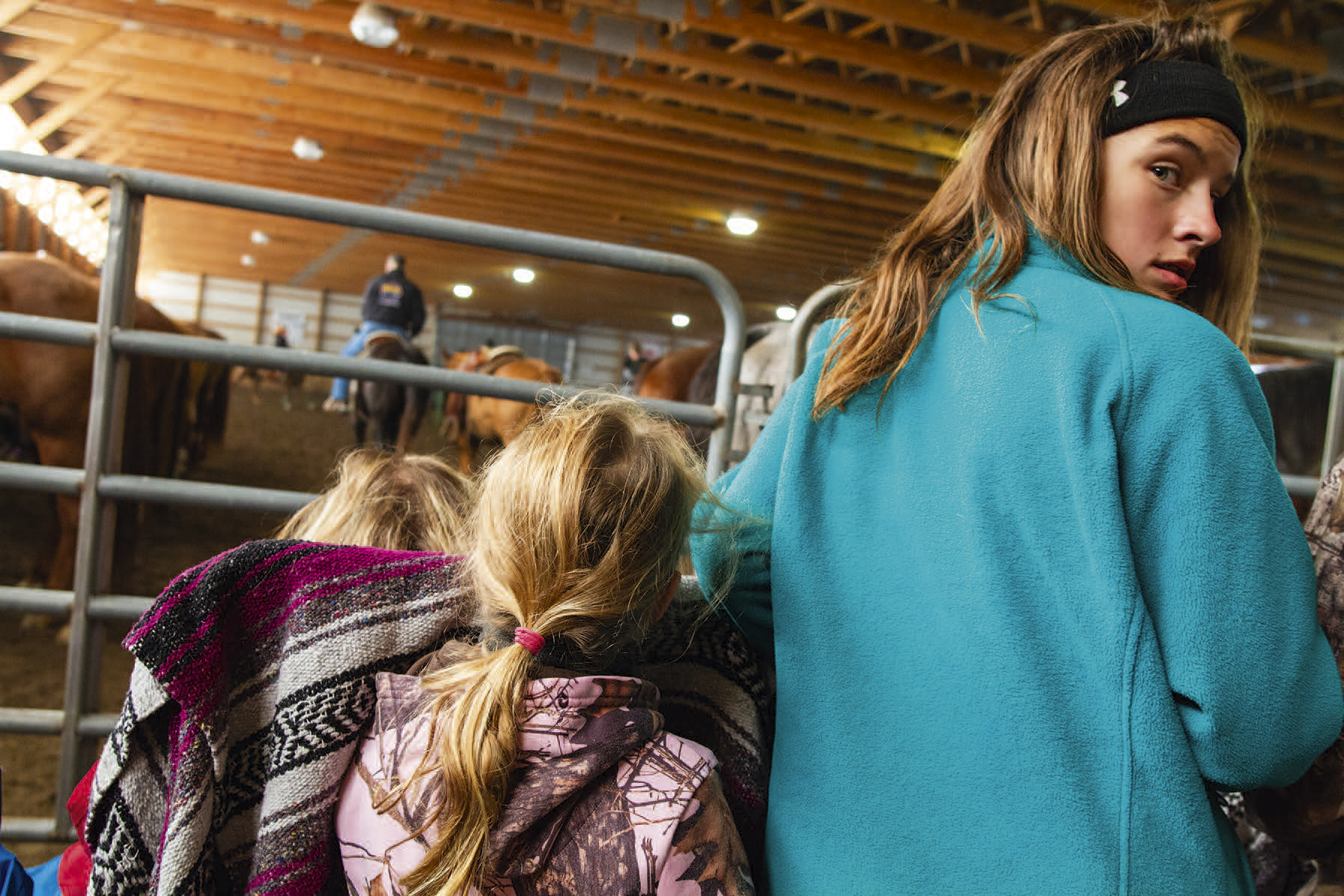
Deep River, Iowa, 2013.
Early in my career, I shadowed a mature, chain-smoking sports photographer at a college basketball game. He handed me a camera (the same kind he was using), let me sit next to him in his designated area beside the court, and told me to photograph whatever I liked. I knew the bare minimum about basketball (ball goes in hoop). So while I frantically pointed the camera in every conceivable direction, hoping I might get lucky enough for an important moment to transpire in front of my lens (but mostly just capturing the athletes’ backsides), my mentor sat monk-like, only raising his camera a moment or two before an important play, then lowering it without even glancing at the LCD afterward. Often, he pointed his camera at a player who didn’t even have the ball yet, but whom he knew was about to, based on the habits of the players and the flow of the game. I quickly realized why his photos would surpass mine, and it wasn’t because he had a better camera. It was because he knew where to look.
Seen from the outside, an artist or other moral agent’s action might look like a free, decisive moment, but in reality, such decisions are the result of a long period of germination within an agent’s attentive consciousness. Murdoch describes moral action, then, as less like self-determining freedom and “very much more like ‘obedience.’” Photojournalists, who live and die by the decisive moment, will recognize the analogy here: that capturing the right moment, like acting rightly, is not an isolated, free act of a narrow ego, but the result of an ongoing, patient attention to a real, shared world.
All photos by KC McGinnis.