


Posts by Image Staff
What Does It Mean to Be a “Religious” Poet?
November 22, 2019
What does it mean to be labeled a “religious poet” in the twenty-first century? The term’s undoubtedly fraught, but “fraught” is perhaps the best word to describe the current relationship between religion and pretty much everything. Small wonder, though, if one accepts the argument of scholars such as Wilfred Cantwell Smith, Talal Asad, and Brent…
Read MoreReturning to Form
November 20, 2019
We’re all familiar with how traditional Western art forms were blown to bits in the early to mid-twentieth century. And we know the locus classicus for this in literature: T.S. Eliot’s The Waste Land, written in the wake of the First World War’s perceived destruction of civilization. Recall The Waste Land‘s characteristic phrases:…
Read MoreThe Expansive Unknowing: An Interview with Darcey Steinke
November 18, 2019
“For me the only way I can have a relationship with divinity is through the unknown, through mystery. If your idea of divinity is leaning into the mystery, you’re more likely to find grace in a variety of places. In my fiction I have tried to make traditionally ugly places beautiful and filled with grace—garbage dumps, malls. I’ve always had that impulse to try to see things not the way the world sees them, but to see the spark of movement and divinity in what is considered to be darkness, ugliness. That makes the most spiritual sense to me.”
Read MoreA Subversive History: An Interview with Music Historian Ted Gioia
November 13, 2019
Ted Gioia is an accomplished music historian whose crisp writing and expansive studies have made his eleven books essentials. His new book, Music: A Subversive History, is a worthy conclusion to a 25-year project, charged by his core belief that “music is a force of transformation and empowerment, a catalyst in human life.” That belief…
Read MoreOpening the Door: A Conversation with Abstract Painter Lanecia Rouse Tinsley
Lanecia Rouse Tinsley is an abstract artist based in Houston, Texas. She creates out of a desire to make the invisible landscapes within us known, using texture, form and color to speak to life in ways she feels words cannot. She says she is drawn to the “negative spaces” in life—times of ambiguity and uncertainty, silence and mystery.
Read MoreThe Unexpected Rigors of Sister Helen Prejean’s River of Fire
November 11, 2019
When my mother was still alive, one of the stories she used to tell was about the role of Catholics in the desegregation of my Mississippi Delta hometown during the 1960s. One white priest, a “Father Love,” she said, had come to town to be in residence at St. Francis, the “black Catholic church,” and…
Read MoreSoftness at the End of the World
November 11, 2019
O you who want to slaughter us, we’ll be dead soon enough what’s the rush / and this is our only world. / Now bring me a souvenir from the desecrated city, / something tender, something that might bloom. Poet Deborah Landau closes her collection Soft Targets with this devastating couplet, the cry of…
Read MoreWriting Out of Experience: An Interview with Ed Falco
November 7, 2019
Ed Falco has been writing poetry, fiction, and plays for 30 years, but his story “Millat’s Orchids” in Image 102 is his first publication in Image. He took time out of his vacation on the East Coast to talk with Good Letters contributor Brad Fruhauff about his evolution as a person and as an author,…
Read MoreBeing Fearsome: Motherhood, Grief, and Unexpected Grace
November 5, 2019
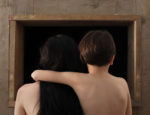
The day before my uncle John’s funeral, I sleep most of the day after school drop off, the night before having been largely consumed by anxiety and grief, a mind untethered and roaming. I wake up to a voicemail from the vice principal of my son’s school, telling me that there has been an incident…
Read MoreI’ll Be Your Mirror: St. Andy Warhol, Holy Fool
November 1, 2019
I have exchanged so much for the intensity of living in New York City: personal space, expendable income, welcome silence, a night sky full of stars. It is deliberate work to live here. The city constantly refashions itself, and so must its people. We develop methods and mechanisms for self-preservation. Some are brusque, others gracious.…
Read More